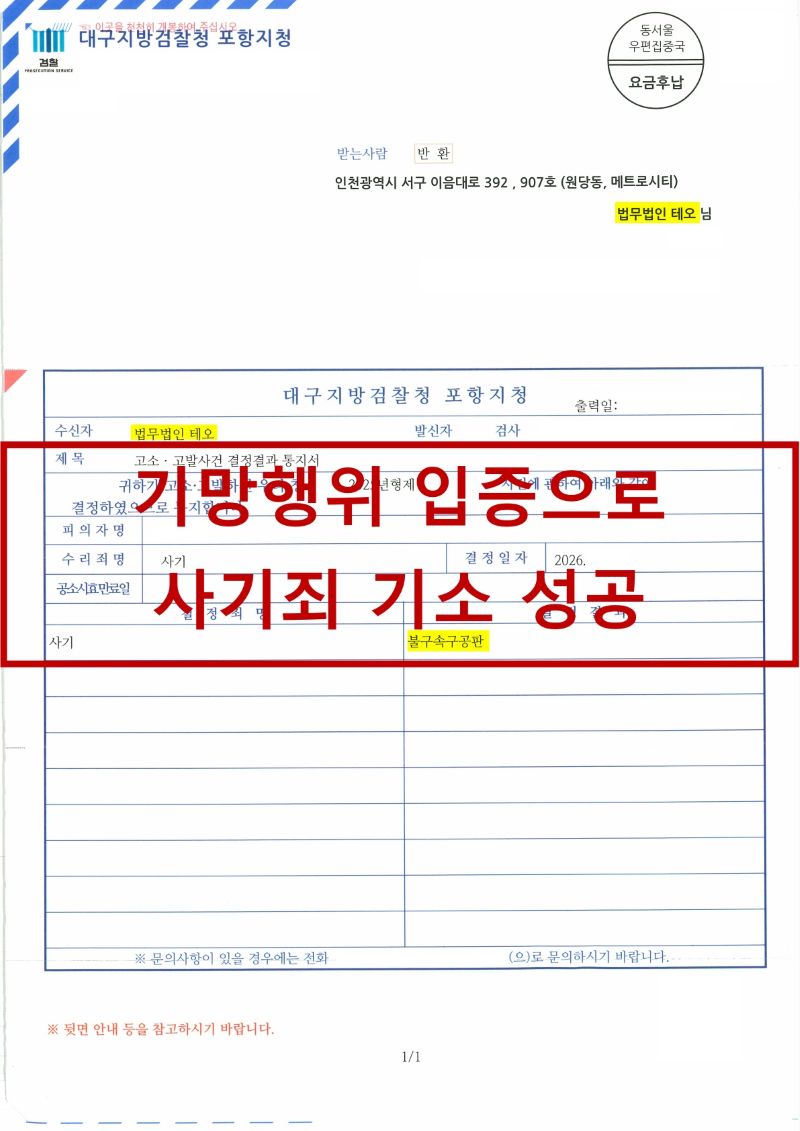
Successful Prosecution for Fraud by Proving Deceptive Intent
26-03-18 341
본문
1. Case Overview
The client, who operates a beauty equipment sales business, suffered significant financial losses after supplying goods worth approximately 27 million KRW to a counterparty who failed to pay the agreed-upon amount. From the outset, the counterparty repeatedly delayed payment. Since the situation outwardly resembled a typical civil dispute over unpaid goods, establishing criminal liability was a challenging task.

2. Key Features of the Case
In cases involving unpaid goods, defendants often attempt to frame the issue as a simple civil breach of contract, arguing that "payment was merely delayed due to management difficulties, not a premeditated refusal to pay." However, the critical issue in this case was that the counterparty was already in a state of financial insolvency—to the point of failing to pay employee wages—and clearly lacked the intent or ability to pay at the time of the transaction.

3. Legal Strategy: Law Firm THEO
Law Firm THEO meticulously collected and organized objective data, including the counterparty’s financial records, existing debt status, and evidence of unpaid wages. We actively demonstrated that this was not a simple case of non-payment, but a deceptive act (fraud) where the defendant received goods without the initial intent or capacity to compensate the client. By reconstructing the transaction history and establishing the "intent to defraud" (criminal intent), we presented a persuasive case to the investigative authorities.

4. Case Outcome
As a result of our efforts, the investigative authorities determined that the matter was not merely a civil dispute but constituted criminal fraud. The suspect was subsequently indicted (referred for a formal public trial). This is a significant success story where, in a case easily dismissed as a simple debt issue, we secured a criminal prosecution by providing a thorough legal review and organizing evidence to prove deceptive intent from the very beginning.