Successful Claim for Damages Due to Defamation and Business Obstruction via False Online Rumors
26-06-26 226
본문
1. Case Overview
The plaintiff is the director of an academy, and the defendant was a student at the academy. The defendant continuously posted slanderous comments containing false information contrary to objective facts on internet communities and student message boards freely accessible to the public, with the intent to defame the academy and diminish its credibility. Consequently, the academy suffered immeasurable and massive business losses, including the degradation of its brand image, withdrawal of existing students, and a decline in new registrations. Seeking accountability for the mental and material damages incurred, the plaintiff approached Law Firm Theo to commission a civil lawsuit for damages.

2. Unique Aspects of the Case
Recently, malicious slander and the spread of false facts via internet boards and social media have surged. Such online defamation cases are characterized by rapid dissemination and strong transmission power; if the initial response is delayed, the scale of damage can grow uncontrollably. In particular, for educational services like an academy, reputation and credibility are directly linked to revenue and survival. Therefore, the core issue of this case was clearly proving that the posts were malicious falsehoods beyond the scope of mere 'subjective reviews' or 'justifiable criticism,' and persuasively presenting to the court the intangible damages that actually occurred as a result.

We formulated a systematic litigation strategy to promptly recover the plaintiff's damages:
- Thorough Evidence Collection and Proof of Falsehoods: Real-time evidence collection of the texts posted by the defendant on internet boards was secured. By analyzing and comparing the content with internal academy records, it was proven and submitted to the court that the posts were explicitly 'false facts' rather than mere expressions of opinion.
- Highlighting the Malicious Intent: Through the frequency of the posts, the severity of the expressions, and the duration of the postings, it was actively argued that the defendant's actions were not for the public interest, but were driven by a malicious intent to strike a blow against the plaintiff.
- Arguing Causality and Legitimacy of Damages: By presenting specific indicators such as the sharp drop in consultation inquiries and mass course cancellations following the defendant's false posts, the focus was placed on proving the direct causal relationship between the act of spreading false information and the damages suffered by the academy.

4. Result of Assistance
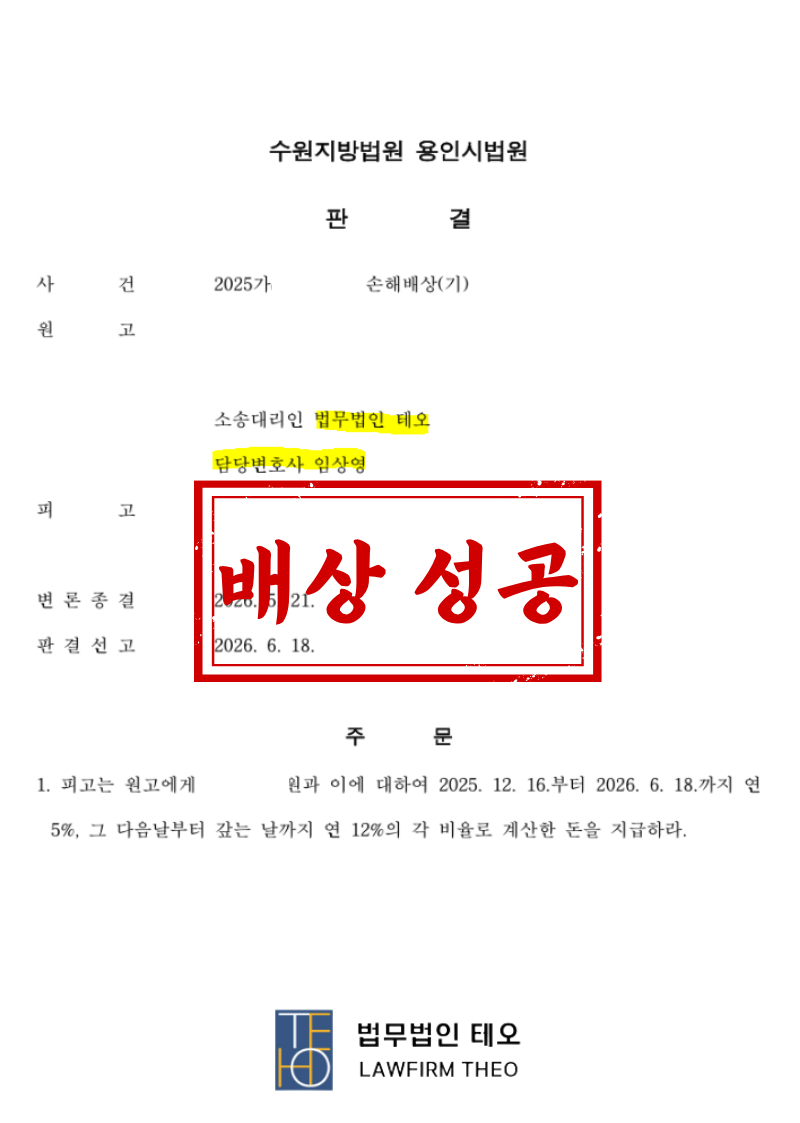
The court fully accepted Law Firm Theo's arguments and clearly recognized the defendant's liability for tortious acts. The bench ruled in favor of the plaintiff, ordering that "the defendant shall pay damages and delay damages thereto to the plaintiff." As a result, the plaintiff not only received substantial financial compensation but also fully recovered the lost reputation and trust by having the law officially recognize that the false rumors raised against the academy were lies.

_____________________